By Arthur, Botswana Head of Production at Atlas Film Fixers — last updated September 2026
Film Fixers in Botswana is, by most measures, the crown jewel of Southern African wildlife filming. It is also one of the most tightly regulated countries in the region to shoot in — a place where the paperwork is as important as the light. Between the Okavango Delta’s endless green channels, the elephant-thick banks of the Chobe River, and the bone-white expanse of the Makgadikgadi salt pans, Botswana offers a concentration of world-class locations that few countries on earth can match. But every one of those locations sits inside a permitting system that is enforced consistently, ministry by ministry, and a production that gets the process wrong can lose days or weeks before a single frame is shot.
Atlas Film Fixers has supported broadcasters, agencies, and production companies filming across Botswana — wildlife documentaries deep in the Delta, broadcast news pieces out of Gaborone, commercial shoots, and multi-country productions passing through on their way to Zimbabwe, Zambia, or Namibia. This guide covers what makes Botswana worth the effort, where productions actually film, what the permitting process really involves, and how we handle it so your team can focus on the shoot itself.
Why Botswana Is Worth the Paperwork
Ask any wildlife cinematographer which African country they’d choose if they could only pick one, and Botswana comes up more often than almost anywhere else. There are a few reasons for that.
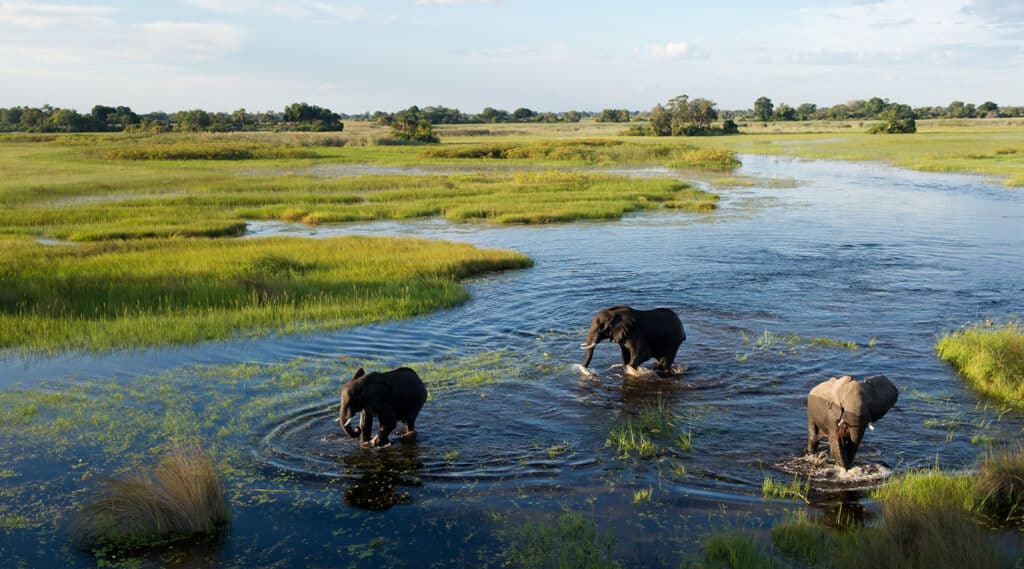
The wildlife density is exceptional. Botswana protects roughly 40% of its total land area in national parks, game reserves, and wildlife management areas — one of the highest proportions of any country in the world. That scale of protection translates directly into density and predictability on camera: the Chobe riverfront alone is home to one of the largest elephant populations on the continent, and the Okavango Delta supports lion, leopard, wild dog, hippo, and more species of antelope than most productions can fit into a shot list.
The government is stable and the process, while strict, is predictable. Botswana has one of the most stable governments in Africa, with a long, unbroken record of peaceful elections since independence. English is an official language alongside Setswana, which removes a layer of friction that trips up productions in less English-fluent markets — contracts, permit applications, and on-set communication with officials all happen in a language your production office already works in.
The landscapes don’t repeat themselves. Within a few hours’ drive or a single light-aircraft hop, a production can move from the lush, water-laced channels of the Delta to the cracked white salt of Nxai Pan, to the red sandstone of the Tuli Block, to the flat grey-green scrub of the Central Kalahari. Few countries let you cut between wetland, desert, and savanna this efficiently.
It hasn’t been filmed to death. Unlike Kenya’s Maasai Mara or South Africa’s Kruger, Botswana’s parks and private concessions see meaningfully less production traffic. That means less competition for prime light and prime animals, and a genuinely better chance of capturing something exclusive.
Where Productions Actually Film in Botswana
Botswana’s filming geography breaks down into a handful of distinct regions, and knowing which one your story needs shapes almost everything else about the shoot — from which airport you fly into, to which permits you’ll be filing, to how much of your budget goes to internal transport.
Gaborone
The capital sits in the country’s southeast and is where most productions start and end their paperwork, even if they never point a camera there. It’s the seat of the Ministry of Environment and Tourism, home to the country’s main international gateway at Sir Seretse Khama International Airport, and the most developed city in terms of hotels, equipment support, and ground infrastructure. Gaborone itself offers usable urban locations too — the Parliament Building, the Three Dikgosi Monument, the Gaborone Game Reserve, and the Mokolodi Nature Reserve just outside the city, home to rhino, giraffe, and hippo within a short drive of downtown. For corporate, government-adjacent, or urban-set shoots, Gaborone is often the only region you need.
Maun and the Okavango Delta
If Gaborone is where the paperwork lives, Maun is where the wildlife filming actually begins. This northern town functions as the staging post for almost every Delta production: crews fly in, restock, and then transfer by light aircraft or boat into the lodges and private concessions scattered across the Delta’s flooded channels. The Okavango Delta itself — a UNESCO World Heritage Site and one of the few major rivers on earth that ends in a desert instead of an ocean — is what draws most international wildlife and natural history productions to Botswana in the first place. Its combination of permanent and seasonal waterways supports an extraordinary range of species and offers some of the most visually distinct water-based wildlife footage available anywhere in Africa.
Chobe National Park and Kasane
In the country’s far north, where Botswana, Namibia, Zambia, and Zimbabwe meet, Chobe National Park is best known for the sheer scale of its elephant herds — estimates put the park’s elephant population among the largest of any single protected area on the continent. The town of Kasane serves as the access point, close enough to Victoria Falls that many productions combine a Chobe shoot with a Zimbabwe or Zambia leg. River-based filming along the Chobe waterfront, with hippo, crocodile, and buffalo alongside the elephant herds, is a signature Botswana sequence for a reason.
The Central Kalahari and the Salt Pans
South and west of the Delta, the landscape changes entirely. The Central Kalahari Game Reserve — one of the largest protected areas in the world — offers vast, open scrubland and is home to some of the last nomadic San communities, along with predator populations adapted to genuinely arid conditions. Further north, the Makgadikgadi and Nxai Pans are enormous, ancient salt flats: during the dry season they’re stark, otherworldly, and almost lunar; during the rains they flood shallowly and draw one of Africa’s lesser-known but spectacular zebra migrations. Productions chasing a desert or “alien landscape” look consistently end up here.
The Tuli Block
In the far east, bordering South Africa, the Tuli Block is a strip of privately owned reserve land known for dramatic rock formations, riverine forest along the Limpopo, and — because it sits outside the government park system — a somewhat more flexible access process than the national parks and reserves further north. It’s a useful option for productions that need striking landscapes without the lead time of a full national park application.
Permits and Logistics: What Actually Has to Happen
This is the part of a Botswana shoot that decides whether your schedule holds or slips, so it’s worth walking through in detail.
The Film Permit is non-negotiable. Every commercial filming or photography project in Botswana requires a Film Permit from the Ministry of Environment and Tourism, regardless of how short the shoot is or where in the country it takes place. There is no minimum threshold below which this doesn’t apply — a half-day corporate shoot in Gaborone needs the same permit as a six-week documentary shoot in the Delta.
Parks and reserves need a second permit on top of the first. If any part of your filming happens inside a National Park or Game Reserve, you’ll also need a Supplementary Permit from the Department of Wildlife and National Parks. Crucially, this can only be applied for once the primary Film Permit has already been granted, and it’s only valid for the specific individuals named on that original permit — so last-minute crew changes can cost you real time here. One detail productions consistently underestimate: every name on that Supplementary Permit has to match the crew member’s passport exactly — full legal name, spelled precisely as it appears on the photo page, not a nickname, shortened first name, or the version on their call sheet. Rangers check this at the gate, and a mismatch is grounds to turn a crew member away on the day, regardless of how minor the discrepancy looks on paper.
You sign the agreement, not your fixer. Successful applicants are required to sign a Memorandum of Agreement (MoA) with the Botswana government before any permit is actually issued. If a fixer submits the paperwork on your behalf, government policy is explicit that the filmmaker — not the fixer — has to be the one who signs. It’s a detail productions are sometimes surprised by, and one worth building into your pre-production timeline.
Budget a month, not a week. Botswana’s official guidance asks applicants to submit at least one month ahead of the intended filming date, and in practice that’s a realistic minimum rather than a worst case. Multiple ministries can be involved depending on your locations, and the single biggest risk to a Botswana production date isn’t a permit being refused — it’s a permit application going in too late to be processed in time. This is genuinely the highest-leverage thing a local fixer does: knowing exactly which supporting documents each office wants up front, so the application doesn’t bounce back and forth losing days each time.
Equipment moves in duty-free, through the right channel. ATA Carnets are accepted for temporary import of production equipment, meaning gear can come in and leave again without paying duty through the Botswana Unified Revenue Service (BURS) — but clearance has to be handled through a registered clearing agent, not informally at the border.
Radios need their own registration. Any two-way radios or similar communications equipment need to be registered and “type approved” by the Botswana Communications Regulatory Authority (BOCRA) before they can be used on set. This is a step productions coming from countries with looser radio rules sometimes miss entirely.
Drones run on their own clock. Drone filming is permitted in Botswana but requires separate approval alongside the standard Film Permit. Because that approval doesn’t automatically move in step with your main permit, drone plans need to be flagged as early as possible in the process — ideally at the very first conversation with your fixer, not once the rest of the paperwork is already moving.
Journalists need a different letter entirely. Foreign press require accreditation from the Office of the President, which involves submitting press cards and passport details in advance — a separate track from standard commercial filming permits.
Crew, Equipment, and Getting Gear to Remote Locations
Botswana has a small local crew base relative to its filming reputation, and most productions plan around that from the start rather than fighting it. The typical model is to bring department heads — DOPs, gaffers, sound, and key grip — up from South Africa’s much deeper crew pool, and combine them with Botswana-based fixers, drivers, camp staff, and general ground support who know the terrain, the parks, and the permitting officers personally.
Camera, lighting, and grip packages are usually brought in from abroad or routed through Johannesburg, which has the region’s most developed rental infrastructure. The real logistical challenge isn’t sourcing the gear — it’s getting it to location. Many of Botswana’s best filming sites, particularly inside the Delta, aren’t reachable by road at all; equipment, crew, and supplies move by light aircraft and, for the final stretch, by boat. A fixer’s job in this environment is as much about weight limits on bush planes and boat schedules as it is about paperwork — getting the right cases on the right flight, in the right order, so nothing sits waiting at a strip while the light you needed passes by.
When to Film in Botswana
Timing in Botswana is a genuine creative decision, not just a logistics one.
The dry season — roughly May through October — is the reliable choice. Wildlife concentrates predictably around the shrinking permanent water sources, skies stay clear for long, dependable shooting days, and road and park access are at their easiest. Daytime temperatures typically sit in the 75–95°F (24–35°C) range, but nights can drop sharply, especially in the Kalahari — productions should plan cold-weather calls even though this is, on paper, a desert country.
The wet season — November through March — is the specialist’s choice. Dramatic cloudscapes, lush green landscapes, and newborn wildlife make for a completely different visual palette, and it’s when the Makgadikgadi zebra migration and the salt-pan flooding happen. The trade-off is harder road access, less predictable wildlife behaviour, and a shorter shooting day once you factor in weather delays. Productions that specifically want the “green season” look plan for this deliberately rather than by accident.
Our Track Record in Botswana
Atlas Film Fixers has provided permits, crew, and on-the-ground production support for international broadcasters, agencies, and production companies filming in Botswana, including work for:
- TRT World (Turkey) — fixer support for broadcast news filming
- BCII TV (USA) — location fixing across a multi-season documentary series
- Nautilus Film (Germany) — production support for a natural history programme
- Luca Ugolini (Italy) — permits and drone clearance across a multi-country Southern Africa shoot spanning Botswana, Zimbabwe, Tanzania, and Ethiopia
- Plastic Pictures (UK) — full production support for a commercial shoot
- CAPA TV (France) — location fixing and logistics
- Hurricane Media (UK) — location fixing and logistics
- Winter Productions (France) — ground transport coordination
- Waddell Media (UK) — multi-country logistics spanning Botswana, South Africa, Malawi, Kenya, and Laos
- Pratt Whitney (USA) — event coordination and logistics
- Greenpark Digital (UK) — production support for a social-first video project
- Victoria Malaval (France) — production and location support

That range broadcast news, natural history, documentary series, commercial, and corporate events — reflects what Botswana actually gets used for on the international production calendar, and it’s the same range of briefs we’re set up to support.
Who Runs Your Shoot in Botswana
71 productions supported · 20+ countries coordinated · 8 years on the ground (2019–present)
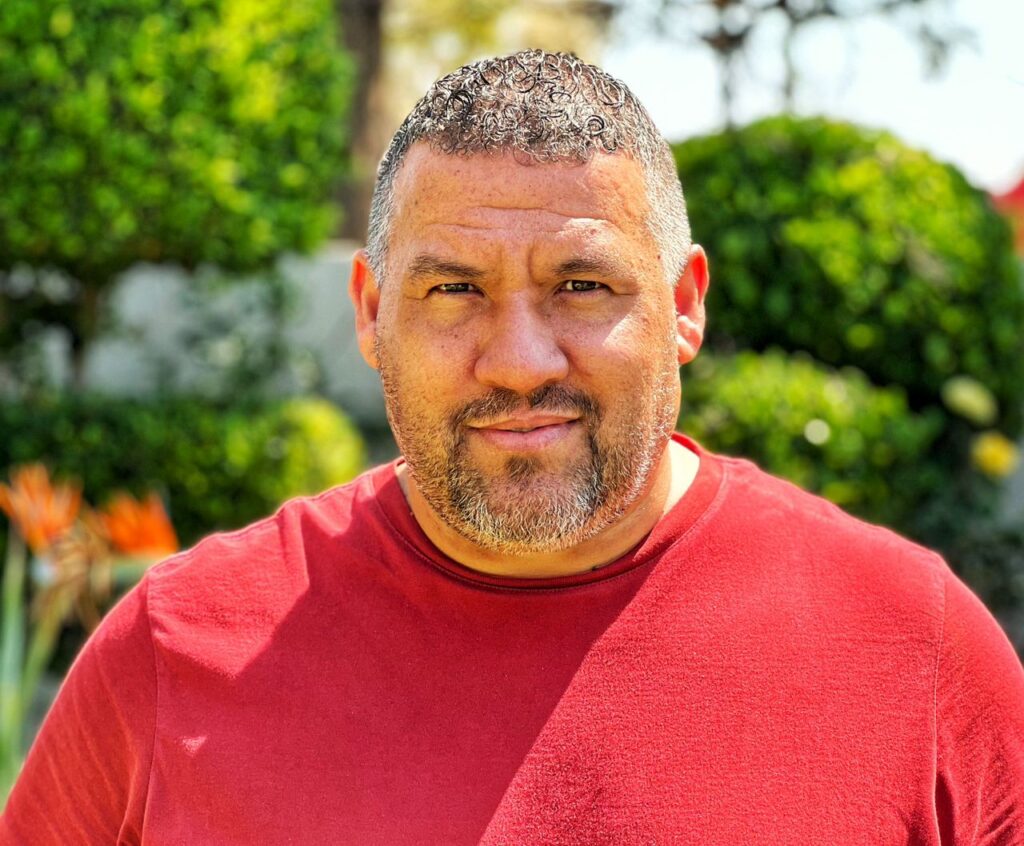
Atlas Film Fixers’ Botswana desk is run by Arthur, a Botswana-based producer and project manager with over 25 years of experience spanning film and television production, transport logistics, construction, and farming. He holds a BA in Film & Television (Cinematography) from Columbia College Hollywood (1997–2002) and has produced and managed international feature films, documentaries, corporate videos, and music videos through his own Botswana-based companies, alongside a parallel career in property management, livestock farming, and heavy transport logistics across Southern Africa.
His best-known credit is “A United Kingdom” (2016), the Amma Asante-directed feature starring David Oyelowo and Rosamund Pike. Arthur represented the Botswana Government in managing the entire in-country production — including sourcing a vintage aircraft and period vehicles and coordinating 250 local and international crew — then led planning, budgeting, and red-carpet security for the Gaborone premiere, attended by the President of Botswana, members of the British Royal Family, and the film’s cast, and co-sponsored by the De Beers Group. He’s credited on IMDb as production manager and actor; the film went on to six award nominations, including Outstanding World Cinema Motion Picture.
Alongside that, Arthur owns and runs a group of Botswana-registered companies that between them cover almost every discipline a foreign production needs on the ground:
- Interface (Pty) Ltd — Director of Photography, television production
- ClockworX Studios (Pty) Ltd — Managing Director; film & TV production plus a music label
- Genuine Partners (Pty) Ltd — Producer, documentaries, corporate videos, feature films, music videos
- Bacchus Rock (Pty) Ltd — Owner/Producer, documentaries, corporate videos, feature films, music videos
- Taylor Transport Logistics (Pty) Ltd — Owner/CEO, fleet logistics and driver management across Southern Africa; Arthur personally holds an Extra Heavy Duty licence for vehicles over 60 tonnes
Outside film, he’s run Lentsweletau Holdings and Barfel Properties (property management, 2002–present) and owns Motubane Ranch (livestock farming, 2002–present). That combination matters more than it might first appear: a Botswana shoot lives or dies on the same problems Arthur has spent his career solving outside of film as well as inside it — moving heavy loads over long distances, managing land access and relationships with landowners and authorities, and getting equipment and people to remote locations on schedule regardless of terrain. It’s a different kind of local knowledge than a producer with only a production background can offer, and it shows up in the details: which back road actually holds up after rain, which official wants a phone call before a form, which lodge can take a generator truck and which can’t.
Since 2019, Arthur has personally supported 71 productions across 20+ countries through Botswana, and his direct working relationship with the Ministry of Environment and Tourism — the office that issues every Film Permit in the country — goes back to representing the Botswana Government on “A United Kingdom.” That relationship doesn’t shortcut the process; Botswana’s permitting is enforced too consistently for that. What it does is remove the guesswork: knowing exactly what each application needs before it’s submitted, rather than finding out after it bounces back.
Frequently Asked Questions
Do I need a permit to film in Botswana?
Yes, without exception. A Film Permit from the Ministry of Environment and Tourism is required for any commercial filming or photography in Botswana, regardless of shoot length or location.
How long does a Botswana filming permit take to process?
Plan for around 30 days. Submit at least a month before your intended start date. Filming inside a National Park or Game Reserve requires an additional Supplementary Permit, which can only be applied for once the primary Film Permit has been issued.
Can I fly a drone for a shoot in Botswana?
Yes, but drone filming requires a separate approval running alongside your standard Film Permit. Flag drone requirements at the very start of the process so both approvals can move in parallel rather than one delaying the other.
Do I need a visa to film in Botswana?
Most visitors from Commonwealth and SADC countries, along with the US, Canada, and most of Europe, can enter without a visa for short stays. A small number of nationalities do require one, so this should be confirmed for every crew member’s passport individually — visa entry is separate from your filming accreditation.
What’s the best time of year to film in Botswana?
The dry season, from May to October, offers the most reliable wildlife viewing and the easiest access. The wet season, November to March, offers a dramatically different green-season look for productions that want it.
What local crew and equipment are available in Botswana?
Local crew depth is limited, so most productions bring department heads in from South Africa and pair them with Botswana-based fixers, drivers, and ground support. Camera and lighting packages are typically sourced from abroad or via Johannesburg.
Is Botswana safe for international film crews?
Botswana has a long-standing reputation as one of Africa’s most politically stable and safest countries to operate in, with a well-established tourism and safari industry already built around hosting international visitors and film crews.
Ready to Film in Botswana?
From the flooded channels of the Okavango Delta to the elephant herds of Chobe and the salt flats of the Kalahari, Botswana rewards productions that plan properly for its permitting process — and penalises the ones that don’t. Atlas Film Fixers handles the permits, crew, and logistics for productions filming anywhere in Botswana, backed by a track record of getting international broadcasters, agencies, and production companies through the process and onto location.