Nigeria does not need an introduction as a film market. Nollywood is one of the highest-output film industries in the world by volume, turning out roughly 2,500 titles a year. What is less understood outside the region is how that scale translates into infrastructure and talent that international productions can actually tap into — and where the country will cost you time if you plan it like anywhere else.
This is a practical guide to what film fixers in Nigeria actually do in 2026, and why several parts of a Nigerian shoot are legally impossible without one. Enquiries have risen sharply as streaming-backed Nollywood output has pushed the market into international view, and most arrive with the same three misconceptions — about permits, about carnets and about drones. Correcting those three is most of what film fixers in Nigeria are for.
We will start with the part most guides bury, because a fixer who will not tell you this is not worth hiring. There is no national film rebate or tax credit in Nigeria. Atlas builds budgets around incentive recovery in more than forty territories, and Nigeria is not one of them. The financial case here is a cost-base case, and it is a strong one — but anyone quoting you a Nigerian rebate figure is quoting something that does not currently exist.
A Market Built on Volume and Talent
Decades of high-output local production mean Nigeria has deep benches of crew, actors and post-production talent, concentrated primarily in Lagos with growing activity in Abuja, Enugu and Port Harcourt. For anyone shooting in the country for the first time, that depth is the headline. This is not a market where you build a crew from scratch. It is one where you select from an existing, experienced pool that works every week of the year rather than only when a foreign production arrives.
English is the official working language, which removes a translation layer from directing, contributor interviews and release paperwork. For documentary and factual work in particular, that single fact changes what is achievable in a shooting day.
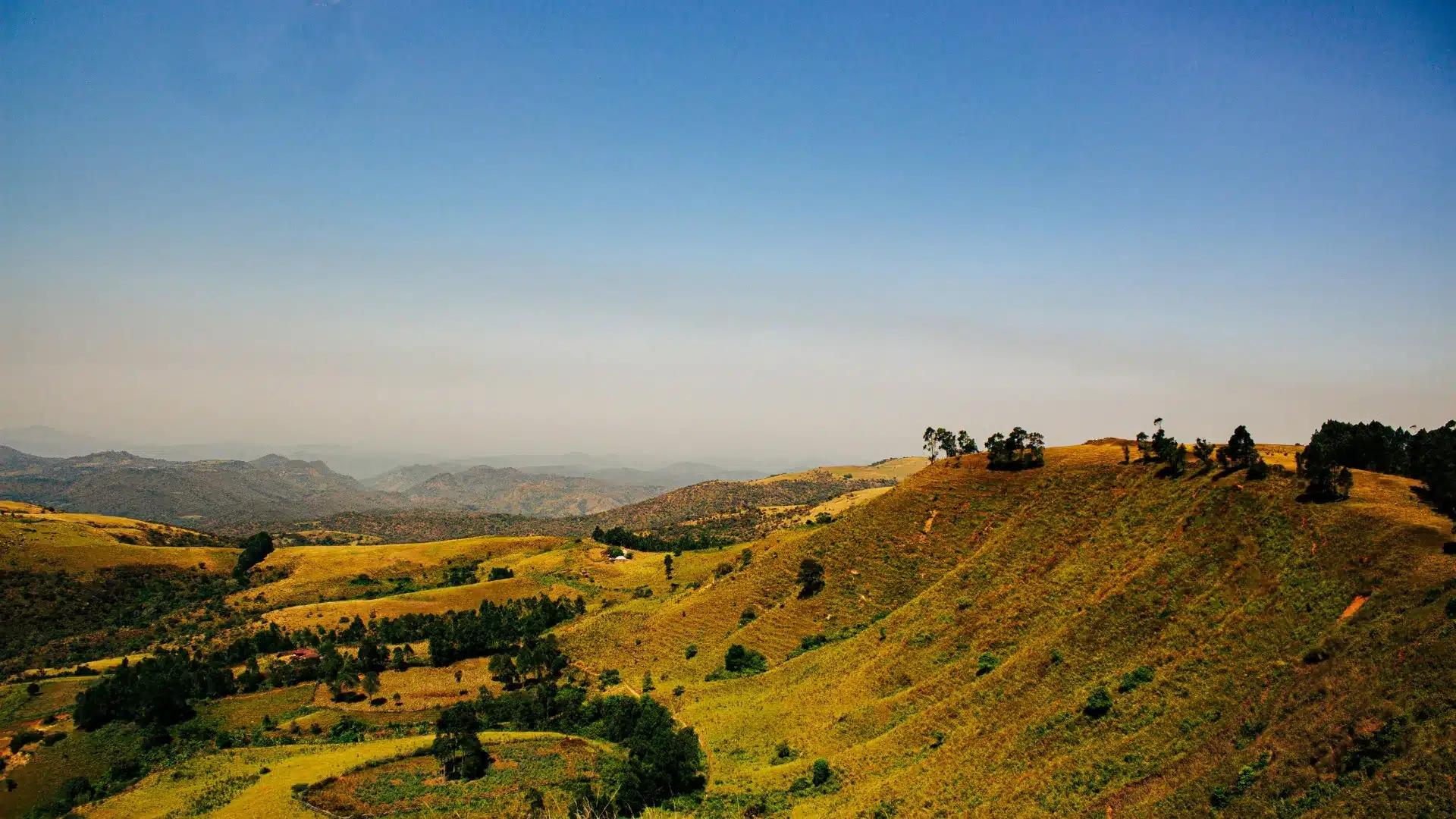
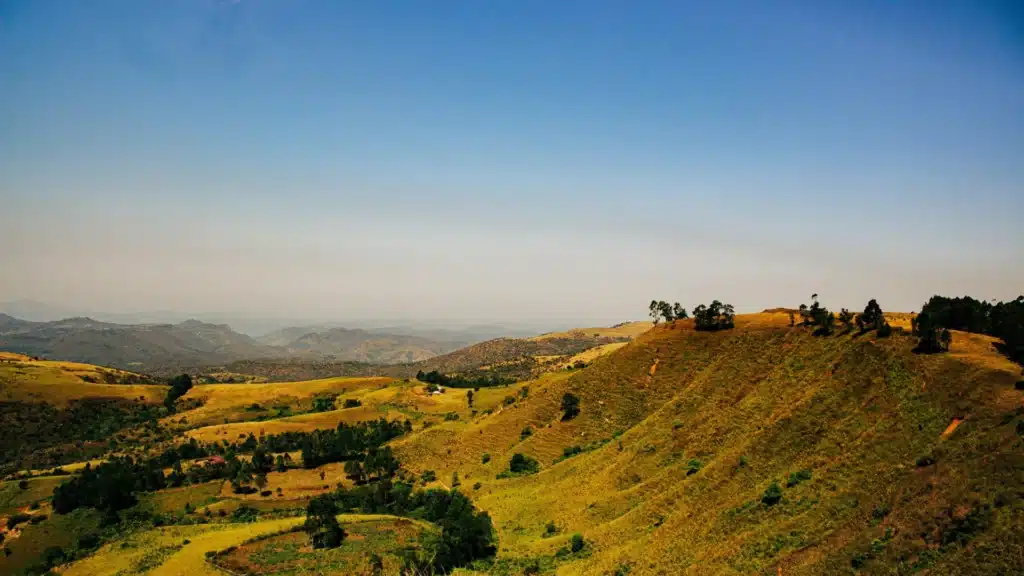
Locations range from Lagos’s dense, layered urban landscape to the Delta’s waterways, the savannah and ancient city architecture around Kano and the north, and the highlands of the Middle Belt. Production logistics vary considerably by region, so scouting with guidance from film fixers in Nigeria early is essential — as is checking each region against current travel advisories, which we cover below.
Where film fixers in Nigeria base productions
- Lagos — the production engine. Deepest crew pool, the strongest equipment rental market in the country, and the widest range of looks within one travel radius. Most productions base here regardless of where the story sits, and most film fixers in Nigeria are headquartered here too.
- Abuja — the planned federal capital. Wide boulevards, modern civic architecture, low congestion. The default for corporate, institutional and government-adjacent work.
- Port Harcourt — oil and gas capital. Refineries, terminals, port infrastructure and industrial estates. Essential for energy-sector briefs and largely ignored by competing guides.
- Enugu and the south-east — close to the Onitsha and Asaba corridor driving Igbo-language output. Strong for cultural, rural and heritage work.
- Calabar — colonial architecture, riverfront, tropical forest. The most permissive advisory position of any Nigerian production centre.
Those five bases cover the majority of international briefs. Anything outside them is workable, but it needs scouting and a security position agreed before it enters a schedule.
Working with film fixers in Nigeria: at a glance
| Working language | English |
| Permit authority | Lagos State FVCB (Lagos) / Nigerian Film Corporation and ministries (elsewhere) |
| Permit lead time | 3–5 working days processing; allow 2–3 weeks |
| Crew visa route | e-Visa, applied for before travel (visa-on-arrival withdrawn 1 May 2025) |
| ATA Carnet | Not accepted — Nigeria is not a member |
| Equipment clearance | Nigeria Customs Service via local importer of record |
| Drones | Foreign drones not admitted; licensed local operator only |
| National rebate | None currently operational |
| Power | Generator backup standard, including in Lagos |
| Advisory position | Varies by state — several carry restrictions affecting insurance |
Permits: Who Actually Issues Them
This is where most international guides get Nigeria wrong, and the error is expensive.
The National Film and Video Censors Board is not your shooting permit. The NFVCB, established under Act 85 of 1993, classifies finished work before it can be distributed or exhibited inside Nigeria. It is a distribution requirement. Applying to the NFVCB for permission to shoot will cost you days and get you nowhere.
Permitting is the first hard requirement, and the first place film fixers in Nigeria earn their fee. Film permits run through two routes depending on location. Lagos State productions are permitted by the Lagos State Film and Video Censors Board, a state body with its own process. Everything else generally routes through the Nigerian Film Corporation or the relevant ministry, with state and local authorities layered on depending on where you are pointing the camera.
Applications are submitted through a registered Nigerian company acting as local sponsor. A foreign production company cannot apply directly, which is the structural reason film fixers in Nigeria are not optional here — the sponsoring entity is theirs, not yours. Standard documentation includes a request letter setting out purpose and dates, the sponsoring company’s certificate of incorporation, a project synopsis, a full location list, and crew and equipment details.
Indicative permit costs run from around NGN 350,000 for a weekly permit to NGN 500,000 for 14 to 18 days and NGN 750,000 for a month, with administrative charges on top. Standard processing is three to five working days on complete documentation. Build two to three weeks of lead time regardless — incomplete applications, not slow officials, cause most delays.
Beyond the base permit, expect separate sign-off for government buildings, federal institutions, national monuments, ports and industrial facilities, and any location with security sensitivity or military assets in shot. Private locations need their own written agreements. None of these are covered by the permit; all of them run on their own clock, and sequencing them is a core part of what film fixers in Nigeria manage.
Crew Visas: The e-Visa Replaced Visa-on-Arrival
This is the single most out-of-date piece of information circulating about Nigerian production, and it still appears in guides published in 2026 — including on sites belonging to production service companies.
Nigeria discontinued visa-on-arrival and replaced it with an e-Visa system effective 1 May 2025, formalised under the Nigeria Visa Policy 2025. Eligible travellers now apply through the Nigeria Immigration Service e-Visa portal before departure, with approvals typically issued to email within 24 to 48 hours and endorsed on arrival. Any guide still telling your production manager to arrange visa-on-arrival is describing a route that closed over a year ago.
Longer or more commercial engagements may still require a Temporary Work Permit supported by a letter of invitation from a registered Nigerian company, processed through an embassy and running two to three weeks. Policy rollout has been gradual in practice, so confirm the current route with your local partner at the point of booking rather than relying on any published guide, including this one.
Start visa work the moment dates are locked — it is the earliest item on the critical path, and the invitation letter has to come from your sponsoring company, which is another reason to appoint film fixers in Nigeria before you appoint anything else. Regardless of visa type, every crew member should travel with a yellow fever certificate, the completed online health declaration, the host company’s invitation letter and full accommodation details. Yellow fever documentation is checked, and crew have been refused boarding without it.
Equipment and Customs: Nigeria Is Not an ATA Carnet Country
This is the most expensive assumption a visiting production can make, and it is the one film fixers in Nigeria correct most often.
The customs conversation is the one that most often decides whether a shoot starts on schedule. Nigeria does not participate in the ATA Carnet system. A carnet issued in your home territory buys you nothing at Lagos or Abuja. Arriving on that basis means your kit sits in customs while the shoot burns scheduled days and your crew sits in a hotel.
Clearance runs through the Nigeria Customs Service with a registered local production company acting as importer of record — in practice, your film fixers in Nigeria. You will need a detailed equipment list with serial numbers and declared values submitted in advance, a customs clearance application letter, and the names and passport details of the crew members physically carrying the gear. Where items arrive that were not on the pre-approved list, a customs bond is typically issued — paid locally, refunded when the crew departs with the same equipment.
Indicative clearance costs sit in the region of NGN 1,000,000 to NGN 1,300,000 depending on volume, covering processing, documentation and on-site assistance. Two practical notes from experience: brand-new equipment attracts significantly more scrutiny than used kit with a service history, and an officer is generally assigned to assist crews on arrival, which is a process to be coordinated rather than avoided. Airport handling at Murtala Muhammed and Nnamdi Azikiwe runs under Federal Airports Authority of Nigeria protocols and needs arranging in advance for any significant package.
Lagos has a genuine rental market — ARRI Alexa Mini and Alexa 35, RED V-Raptor, Sony VENICE, FX6 and FX9, Canon C500 Mk II, Cooke and Zeiss glass, ARRI and Aputure lighting, grip trucks, dollies and remote heads. The practical approach most film fixers in Nigeria will recommend is a local base package supplemented by a short list of imported specialist items, rather than shipping everything.
Drones: Plan Without One
Aerial work is the most restricted element of Nigerian production and the area where optimistic planning does the most damage to a shot list.
International crews are, in practice, not able to bring drones into the country. Foreign drone equipment is routinely confiscated at the border and not returned. This is not a permit you can expedite — it is a hard constraint to design around.
Domestic drone operations are regulated by the Nigerian Civil Aviation Authority, with additional clearances that may involve the Office of the National Security Adviser, the National Airspace Management Agency and state security depending on location and flight profile. Applications must be made through a licensed local operator; foreign crews cannot apply on their own account. Timelines run from five to ten working days for standard approvals and extend to two weeks or more where security clearance is involved, with no guarantee of approval.
Assume no aerial coverage until a licensed local operator confirms otherwise in writing. Experienced film fixers in Nigeria hold these operator relationships already, which is the difference between a five-day approval and no approval at all. The workable plan is to engage a locally licensed operator with existing permissions, and to design a ground-based alternative — crane, elevated platform, high-floor access — into the shot list from the start rather than improvising on the day.
Power, Security and the Practical Realities
Power reliability is the operational issue to plan around. Generator backup is standard regardless of location, including in Lagos, and should be budgeted as a line item rather than held as a contingency.
Traffic in Lagos is a schedule cost before it is a budget one. Journey times between Victoria Island, the mainland and the airport swing dramatically by time of day. Cluster locations geographically, build buffers into unit moves, and treat early calls as a scheduling tool.
Security planning is not optional and it is not only about crew safety — it is about whether your production is insurable. Several Nigerian states carry restrictive travel advice. The UK advises against all but essential travel to Plateau State and several northern states; the US places Plateau in its do-not-travel category; Canada advises against all travel to a number of regions while explicitly excluding Lagos and Calabar from its wider advisory. Production insurance and completion bonds are priced against these advisories, and including a do-not-travel state in a schedule can affect cover for the whole shoot rather than only those days.
Advisory position is a commercial fact, not a footnote, and film fixers in Nigeria should be raising it at the location list stage rather than after the schedule locks. Build the location list against current advisories at prep, not at the airport.
Incentives: The Honest Position
Nigeria’s federal and state governments have shown increasing interest in supporting the film sector, and discussion of incentive frameworks aimed at attracting international production spend has been ongoing for several years. The Nigerian Film Corporation has been described as evolving toward a film commission structure.
None of that is something you can budget against. As of August 2026 there is no operational national cash rebate or tax credit for international productions. That is the honest starting point for costing a Nigerian shoot, and any film fixers in Nigeria telling you otherwise are selling something that does not exist. Any percentage quoted to you should be verified with the Nigerian Film Corporation directly before it enters a budget, and treated as absent until it is confirmed in writing.
Atlas works across territories where incentive recovery genuinely moves the numbers, and we will tell you plainly when a country is not one of them. Nigeria’s financial case rests on cost base rather than recovery: competitive crew rates, local supplier pricing, accessible location fees and a real domestic rental market that removes freight from the budget. For projects where recovery is the deciding factor, we will point you toward the territories that actually deliver it and model the comparison honestly.
Budget Planning: What to Cost Before You Commit
Nigerian budgets fail in prep, not in production, and usually in the same places. Good film fixers in Nigeria will price all of the following before you commit; weak ones will price the obvious half:
- Film permit fees, by state and by duration — there is no single national figure
- Customs clearance and the customs bond, a cash-flow item even when refundable
- Airport protocol and equipment handling on arrival and departure
- Location fees for private property, negotiated individually and highly variable
- Generator hire and fuel, as a line item rather than a contingency
- Security provision — assessment, vetted drivers, secure transport, location security
- Local crew and supplier rates confirmed against your actual dates
- Domestic flights and vehicle movement between production centres
- Traffic contingency in Lagos
- Drone feasibility, and the cost of the ground-based alternative if it fails
- Fixer and local production management fees
Get those eleven lines right and a Nigerian shoot prices predictably. Get them wrong and the overage lands in the last week of the shoot, when there is no room left to absorb it.
What Film Fixers in Nigeria Actually Do
Nigeria is too large and too regionally varied to navigate well from the outside, and several parts of the process are legally closed to a foreign production. Permits are submitted through a registered Nigerian company. Customs clearance requires a local importer of record. Drone approval can only be applied for by a licensed local operator. Visa invitations come from a Nigerian host company. Film fixers in Nigeria are not a convenience on a shoot here — they are the mechanism by which the shoot becomes possible, and the single biggest determinant of whether it runs to schedule.
Atlas provides film fixers in Nigeria across the country’s key production regions, covering permit coordination, customs clearance, crew sourcing, location scouting, transport, security planning and logistics that account for the realities of shooting here. Our Nigeria region guide sets out the permit framework in more detail. Where a project’s viability depends on financial recovery, our rebates and incentives team models the comparison across territories so the decision is made on real numbers. You can see the range of work we support in our portfolio and hear directly from the productions we have delivered for on our clients page.
The value of experienced film fixers in Nigeria shows up in the parts of a schedule nobody plans for: the equipment item that was not on the manifest, the location owner who renegotiates on the morning of the shoot, the road closure that reroutes a unit move an hour before call.
Frequently Asked Questions
What do film fixers in Nigeria actually do?
Film fixers in Nigeria act as your registered local sponsor, which is a legal requirement rather than a service upgrade. They submit permit applications, act as importer of record for equipment customs clearance, issue the invitation letters that support crew visa applications, engage licensed drone operators, and source crew, locations, transport and security. Several of those functions cannot be performed by a foreign production company at all.
How much do film fixers in Nigeria cost?
Fees vary by scope and shoot length and are quoted against the brief rather than from a rate card. The fixed regulatory costs they coordinate are more predictable: permits from around NGN 350,000 for a week to NGN 750,000 for a month, and customs clearance in the region of NGN 1,000,000 to NGN 1,300,000 depending on volume. Ask any fixer to separate their own fee from pass-through costs in writing.
Do you need a permit to film in Nigeria?
Yes. Professional productions require a filming permit, issued by the Lagos State Film and Video Censors Board for Lagos shoots or through the Nigerian Film Corporation and the relevant ministry elsewhere. Applications must be submitted by a registered Nigerian company. Government buildings, ports, industrial facilities and private locations require separate approvals on top of the base permit.
Can a foreign production apply for a Nigerian permit directly?
No. Applications go through a registered Nigerian company acting as local sponsor, which is why film fixers in Nigeria are structural to the process. The same applies to equipment importation and drone authorisation, both of which require a local entity or licensed local operator.
Is the NFVCB the body that issues filming permits?
No, and this is a common and costly misunderstanding. The National Film and Video Censors Board classifies finished work before distribution or exhibition inside Nigeria under Act 85 of 1993. It is a distribution requirement, not a production one, and it does not issue shooting permits.
Do international crews still get a visa on arrival?
No. Visa-on-arrival was discontinued and replaced by an e-Visa system effective 1 May 2025 under the Nigeria Visa Policy 2025. Crews apply through the Nigeria Immigration Service e-Visa portal before travel, with approvals typically returned within 24 to 48 hours. Longer or commercial engagements may require a Temporary Work Permit supported by an invitation letter from a Nigerian host company.
Can international productions fly their own drones in Nigeria?
In practice, no. Foreign drones are routinely confiscated at the border. Drone operations require authorisation obtained through a licensed local operator, with clearances that may involve the Nigerian Civil Aviation Authority and security agencies. Productions requiring aerial coverage should engage a licensed local operator and design a ground-based alternative into the shot list.
Does Nigeria offer a film rebate or tax incentive?
No. There is no operational national cash rebate or tax credit for international productions as of August 2026. Discussion of incentive frameworks has been ongoing but nothing is currently available to budget against. Nigeria’s financial case rests on a competitive cost base rather than incentive recovery.
Where do film fixers in Nigeria usually base a shoot?
Lagos, for most projects — it has the deepest crew pool, the strongest rental market and the widest range of looks in one travel radius. Abuja suits corporate, institutional and government work. Port Harcourt suits energy and heavy industry. Enugu suits cultural and rural drama, and Calabar suits period, tourism and natural-history production.
Is it safe to film in Nigeria?
Large parts of the country are workable with support from experienced film fixers in Nigeria, and Lagos, Abuja, Calabar and Port Harcourt are filmed in regularly. Several states carry restrictive travel advisories from the UK, US and Canadian governments, and those advisories affect production insurance as well as crew safety. Every schedule should be built against current advisories with a proper risk assessment at prep stage.
How much does a Nigerian shoot cost?
There is no single answer, but the fixed regulatory items are predictable: permits from around NGN 350,000 for a week to NGN 750,000 for a month, and customs clearance in the region of NGN 1,000,000 to NGN 1,300,000 depending on volume. Crew, transport and location costs are competitive against South Africa, Morocco and the Gulf. Generator hire, security provision and Lagos traffic contingency are the lines most often underestimated.
How far in advance should a production start planning?
Six to eight weeks is comfortable for a standard commercial or documentary. The binding constraints are permit processing, customs pre-clearance, e-Visa applications and, where applicable, drone approvals, which can run two weeks or more on their own. Government location access in Abuja should start earlier still.
Planning a Shoot in Nigeria
Nigeria rewards productions that come in with strong local partnerships and punishes those that improvise. The creative and commercial case is real: crew depth few African markets can match, a genuine equipment rental market, English on set, and a cost base that stretches a budget further than most comparable territories.
What it demands in return is that you treat the approvals as the schedule rather than as paperwork attached to it. Pick the permit route by state, apply for e-Visas early, submit a clean equipment manifest, plan aerial coverage on the assumption that drones may not fly, and build the location list against current travel advisories rather than against the most photogenic option.
If you are scoping a project, get in touch. We will build a realistic production plan and put experienced film fixers in Nigeria on the ground for you — including an honest view of where the money is, and where it isn’t.